philippzollinger c/o Galerie Mueller, Basel: Theo Eble, Renée Levi

Rebgasse 46, 4058 Basel
Renée Levi was born in Istanbul in 1960 and grew up in the canton of Aargau. After completing her studies in architecture at FHNW Muttenz, she went on to study art at the ZHdK. This dual grounding in architecture and fine art has remained central to her work to this day. Since the early 1990s, Levi has lived and worked in Basel, a city whose art history and institutional landscape have had a lasting influence on her practice. In addition to painting, she realizes site-specific works and installations.
Levi’s work can be situated within an expanded context of Basel abstraction while asserting a distinctly independent position. In the twentieth century, Basel was an important center for the development of abstract approaches, not least through artists such as Sophie Taeuber-Arp and Hans Arp. Their abstraction established an open formal language that deliberately resisted rigid systems and hierarchical pictorial orders. This understanding of form as something organic and process-based finds a contemporary counterpart in Levi’s practice: her works likewise emerge from movement, intuition, and bodily presence rather than from preconceived compositions. Color in her work is not used illustratively, but functions as an autonomous force.
A significant point of origin for this Basel tradition was the exhibition "Das Neue Leben", held at the Kunsthalle Basel in 1918. It articulated the ambition to understand art as a comprehensive life practice and to bring together and make visible the boundaries between different stylistic directions. This openness toward material, medium, and scale continued to shape Basel abstraction well into the second half of the twentieth century. In the postwar period, the Kunsthalle Basel continued to play a central role in presenting and advancing abstract and experimental positions. Within this context, questions were explored that are also fundamental to Levi’s practice: the expansion beyond the classical picture format, the relationship between painting and space, and the opening of abstraction toward installation-based approaches.
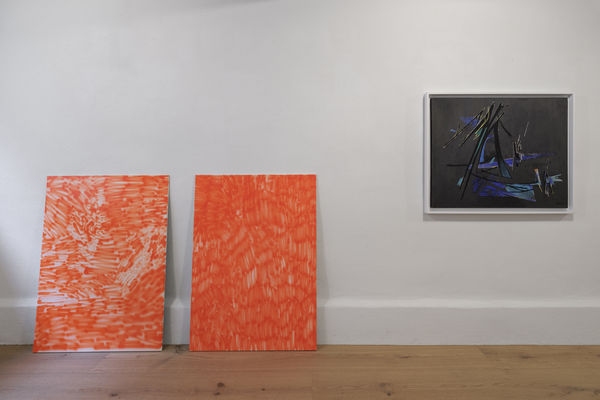
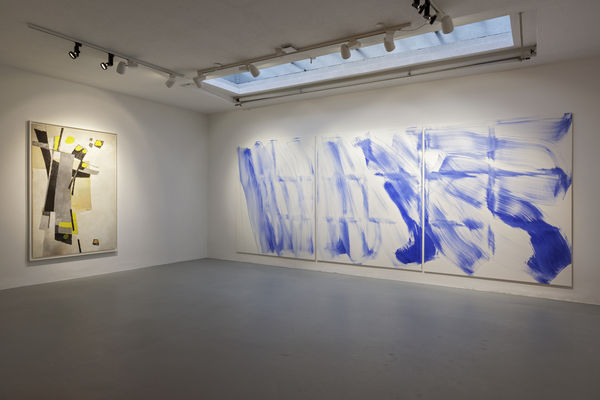
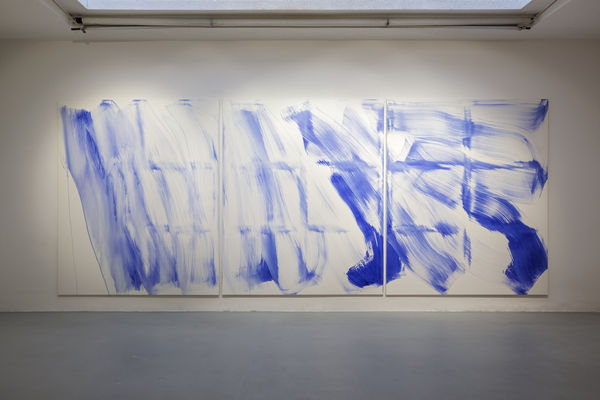
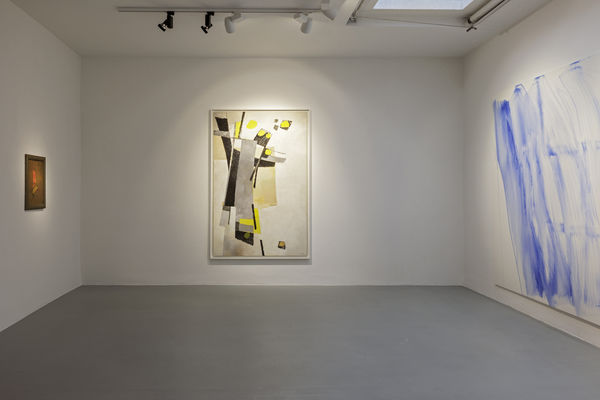
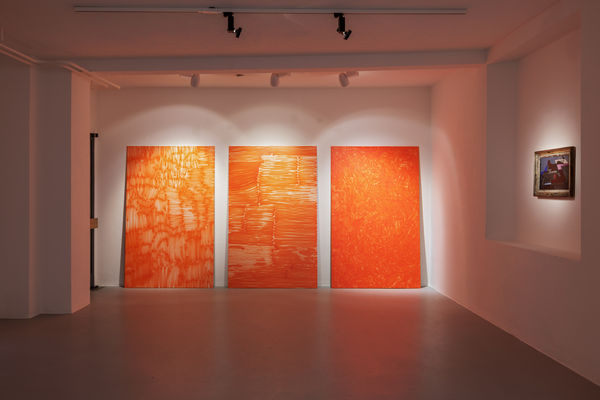
In the dialogue between Renée Levi’s painting and the work of Theo Eble, a compelling evolution in the understanding of space becomes apparent. Eble, an important representative of non-figurative art in Basel and co-founder of Gruppe 33, early on devoted himself to integrating art and architecture, notably through stained-glass windows and wall paintings from the 1950s onward. His approach to the surface within concrete art aimed at integration into the built environment. Levi takes up this dialogue half a century later, but transforms it radically. While Eble’s work often remained tied to the medium of traditional painting or permanently installed wall works, Levi physically crosses this boundary: she uses raw, industrial gypsum boards as temporary, mobile image carriers and simultaneously as space-forming elements that challenge the geometry of the exhibition space itself. In Levi’s work, space is not merely represented or integrated, but made physically tangible through installative placement and the bodily gesture of spraying, thereby replacing the static spatial concept of modernism with a dynamic form of “expanded painting.”
Recent solo exhibitions by Renée Levi include presentations at Öktem Aykut (Istanbul, 2025 & 2022), the Palais de Tokyo (Paris, 2024), Galerie Mezzanin (Geneva, 2024), PHILIPPZOLLINGER (Zurich, 2023 & 2021), Villa du Parc (Annemasse, 2021), the Musée d’Art, Histoire et Archéologie d’Évreux (2020), the Biennale de Lyon (2019), Museum Langmatt (Baden, 2019), the Istituto Svizzero in Milan (2019), and Galerie Freymond-Guth (Basel, 2017). In addition, she has participated in numerous group exhibitions, including at the Palais de Tokyo (Paris, 2023), Centre d’art Pasquart (Biel, 2022), MAMCO (Geneva, 2021), the Istituto Svizzero in Rome (2019), Vin Vin (Vienna, 2018), and Kunstverein München (2015). Renée Levi has received several awards, among them the Prix de la Société des Arts de Genève (Visual Arts) in 2019 and the Prix Meret Oppenheim in 2002. She is also the winner of the competition for art in architecture for the Swiss Parliament Building in Bern.
-

-
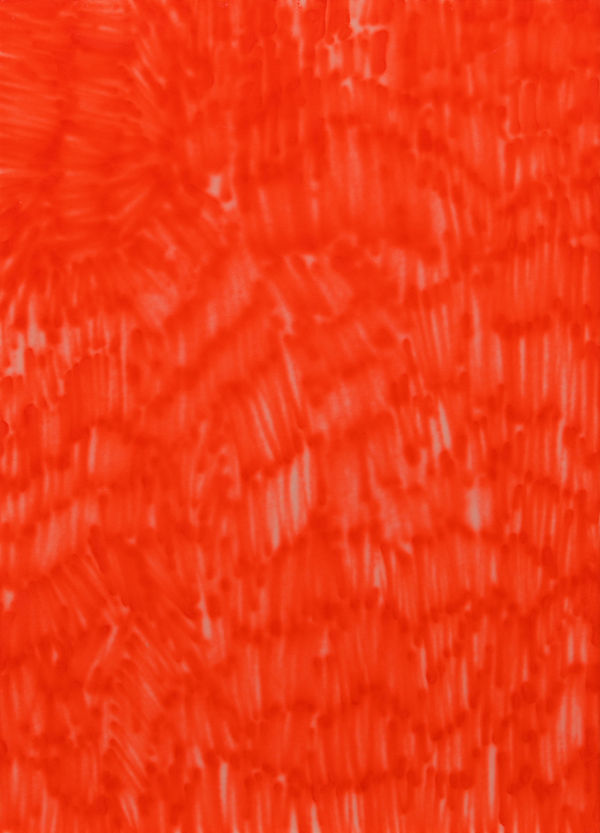
Untitled, 2000Acrylic on plaster125 x 90 cm
-
Untitled, 2000Acrylic on plaster125 x 90 cm
-
-
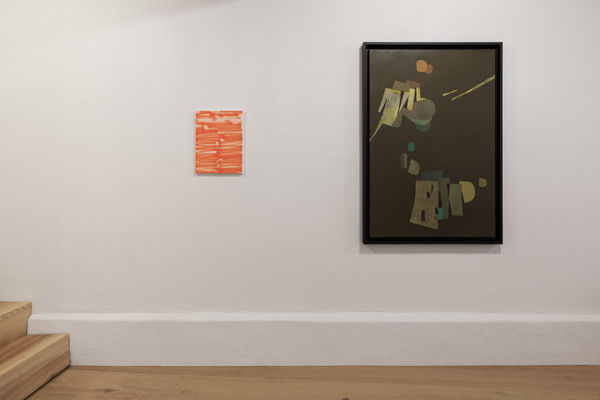
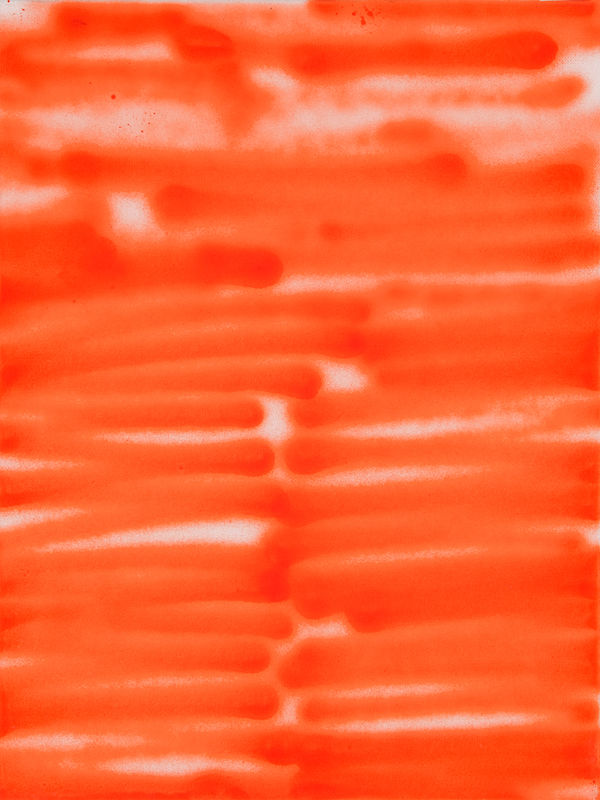
Untitled, 2001Acrylic on cotton40 x 30 cm
-
Untitled, 2001Acrylic on cotton40 x 30 cm
-
-
Untitled, 2010Acrylic on cotton230 x 570 cm
-
-
-
Untitled, 2000Acrylic on plaster200 x 124 cm
-
Untitled, 2000Acrylic on plaster200 x 124 cm
-
Untitled, 2000Acrylic on plaster200 x 124 cm